The Lymington Workhouse: dreaded stigma and harsh regime
A necessary place of shelter for the New Forest poor, but dreaded 'Bastille' after 1834's new Poor Law
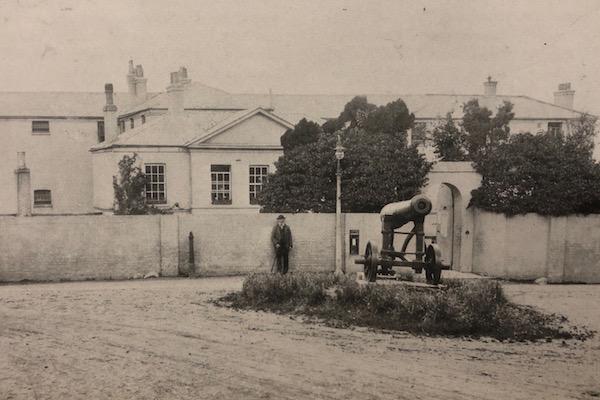
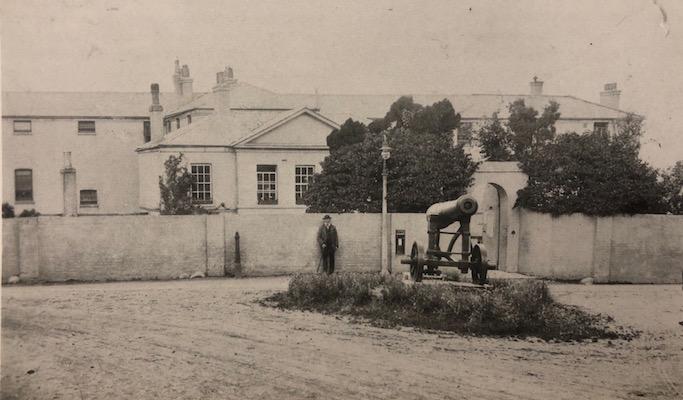 In the early 18th century, workhouses were established to provide a place of shelter for homeless and poor people in return for work. Lymington's Poor House was built in 1738, costing £248 10s.
Richard Budden was the first Master and Henry Hackman was Medical Officer, each with salaries of £10 per annum. One of their duties was to find apprenticeships for males aged 7 to 24 years, and apprenticeships (or marriage) for females aged 7 to 21 years. In 1738 there were 64 people considered suitable to accept apprentices. The number of children at the Poor House between 1700 and 1773 was 141.
In 1780 it was agreed that all 'inmates' from the Lymington Poor House should wear the letters LP for identification, otherwise the Master would not receive that week's pay. In the same year, James Alexander was warned that if he did not contribute towards the maintenance of his child, the Parish would endeavour to get him on board a 'Man'o'War' naval ship - at the time Great Britain was at war with France and Spain...
By 1788 there were discussions with neighbouring parishes, who organised their own Poor Houses, to combine resources and build one common Union Workhouse to serve the whole district - it took 48 years and the introduction of a new Poor Law to reach an agreement!
The new Poor Law was introduced in 1834, changing the way that relief was given to the poor, but significantly made Lymington the centre of a Poor Law Union comprising the surrounding parishes of Boldre, Brockenhurst, Milford, Milton and Hordle (a combined population of 9,501 in 1831). Twelve guardians were appointed to oversee the Union, four from Lymington and the other from the surrounding parishes.
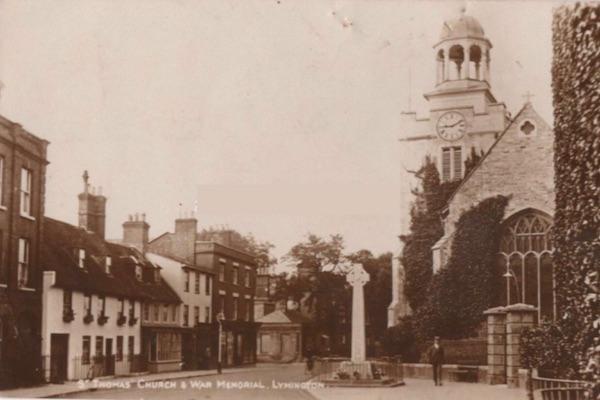
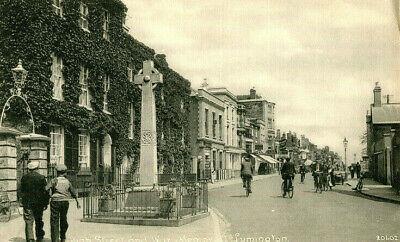
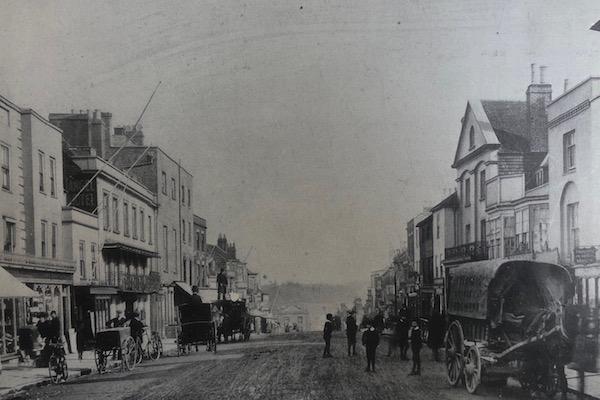
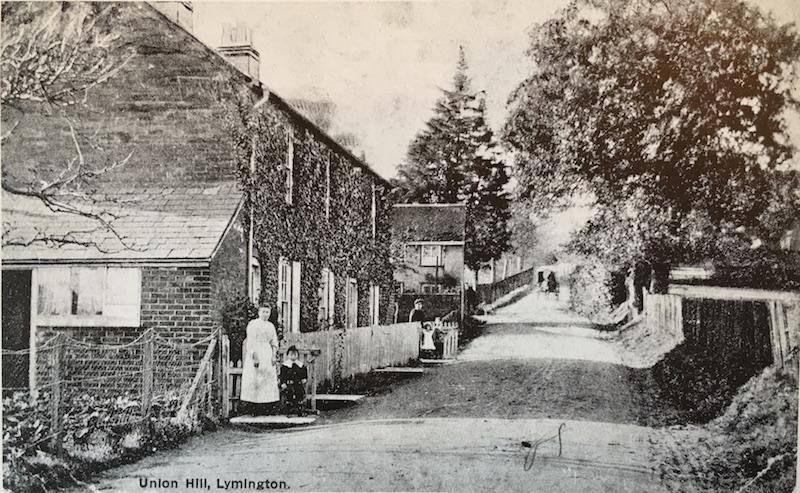 It was decided that a Workhouse should be built near the old Poor House on Union Hill opposite New Lane (now known as East Hill - image shows the bottom of Union Hill). Mr Sampson Kempthorne was the architect of the building that was designed to accommodate 270 inmates, based on his model "200-pauper" plan published by the Commissioners in 1836. It cost £4,500 to build and was completed in 1838.
A master and a matron were appointed to manage the Workhouse, where there were clearly defined regulations. Prayers and grace were said before each meal. The Master was required to inspect the dormitories each morning at 9am to ensure they were clean and tidy. The Matron had similar duties specifically for the women and children, with the added responsibility for moral behaviour. Inmates had to be in bed by 9pm with lights out.
Under the regime of the new Poor Law, any dignity of the individual was effectively abandoned. On arrival at the Workhouse inmates were examined by the Medical Officer after being bathed and deloused. They were allocated a dormitory ward in which to sleep - men and women were allocated separate dormitories and married couples were separated. During the first decade, Workhouses were often called 'Bastilles' because of the severity of their regime.
In time, reaction against the system led to beneficial changes, both in the administration and operation of workhouses, however the stigma of the workhouse remained.
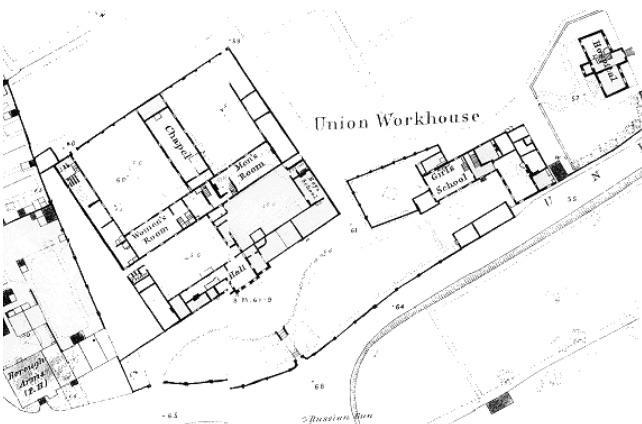 The Lymington Workhouse was set in three acres of grounds where vegetables were grown to make the institution as self-supporting as possible. A typical Sunday diet at the Workhouse was: breakfast - 1/2 lb bread with skimmed milk, dinner - 5oz dressed mutton with vegetable soup, supper - broth and maybe a little cheese to follow if the Master desired.
The entrance block at the south contained a waiting room, with porter's room and search room to the left and bread room and lavatory to the right. On the first floor were the guardians' board room and a clerk's office. To the rear, men's and women's accommodation blocks stood the the east and west, originally linked by a dining hall.
By 1860 (see plan), the school rooms had been relocated - the boys to the south-east of the main building and the girls to a separate block at the east. A chapel was situated to the north. A building referred to as the Master's House stood at the east, where the old parish workhouse had been located.
Single storey utility rooms and workshops stood around the perimeter, including washhouse and laundry. A detached infirmary stood at the east of the Workhouse, replaced by a new building in 1928.
From around 1904 the birth certificates of those born in the workhouse did not mention the workhouse so as not to stigmatise later in life, a street address: 20 New Street was given instead.
Later the workhouse was renamed 'Lymington Infirmary' and closed in 2004 for redevelopment. The buildings are now private residences.
Today, New Forest Basics Bank works hard to help out those in need in our local community. Find out more here and do remember to pop something in the collection when you shop - it's a sad truth that poverty remains today...
Don't miss out! If you haven't done so already, do sign up free of charge to receive our Weekly What's On newsletter! Emailed every Friday morning to help you plan your weekend!
Sources:
Lymington: A History and Celebration by Jude James
Lymington: a pictorial past by Brian J Down
http://www.workhouses.org.uk/Lymington/

 Lymington RNLI Inshore lifeboat station was formed in 1965 out of an independent service previously run by the local sailing clubs, with a D-class lifeboat. For over 50 years the Lymington Lifeboat has covered an area of the western Solent. Six awards have been presented to members of the lifeboat crew for gallantry.
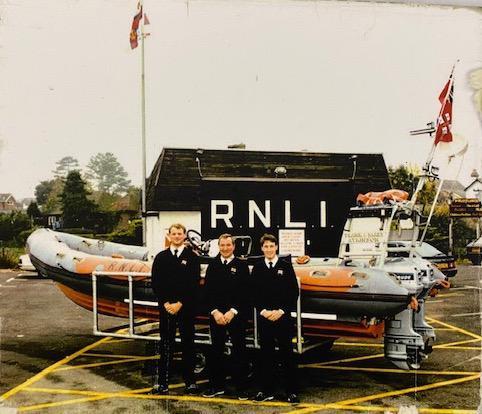 The D-class lifeboat was withdrawn in August 1973 and replaced by a B class Atlantic 21. The Atlantic 21 was part of the B-class of lifeboats and first generation Rigid Inflatable Boat (RIB) that was named after Atlantic College in South Wales, the birth place of the RIB. The versatile Atlantic 21 could be launched from a davit, trolley or floating boathouse depending on the location of the station and the available facilities.
 In 1978 a new boathouse was built near the Yacht Club and marinas.
 In a gale and rough sea he swam from the lifeboat and led her two crew over the marshes for half a mile to the lifeboat on 17 December 1980. Crew members Peter Harvey and Simon Chalk were presented with medal service certificates.
 One year later in 1988, framed Letters of Thanks were awarded to Helmsman Alan Coster and Crew Member Michael Crowe for a service to a 28ft yacht, which was in difficulties off the Shingles Bank. Crew Member Nicholas Hayward and the helicopter crew also involved in this service received letters of appreciation from the Director.
 An Atlantic 75, (B-784) Victor ‘Danny’ Lovelock, replaced the Atlantic 21 lifeboat in 2002. In the same year, Thanks of the Institution inscribed on vellum was awarded to Helmsman Nicholas Hayward for saving the three crew and the yacht Piciess. Crew Members Barry Down, Robin Mursell and Austin Honeysett each received a Framed Letter of Thanks for this service. The B-class lifeboat was operating at the very limit of her capabilities in a force 8/9 gale, torrential rain and very rough seas.
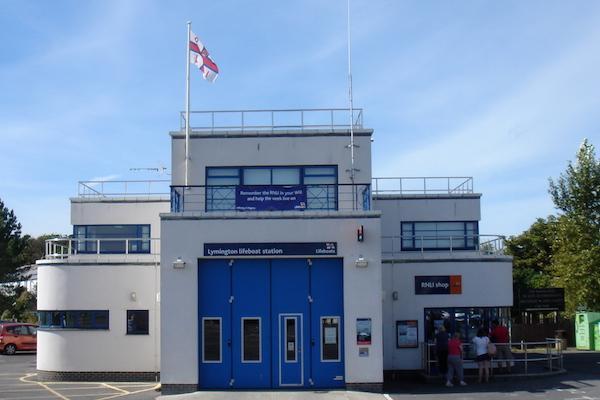 In 2006, a new ‘future proofed’ boathouse was built on the existing site, providing facilities for training, crew changing, workshop and storage together with an enlarged boat hall allowing the lifeboat launching cradle to be permanently hitched to the tractor for safer and faster launching. An expanded souvenir outlet was also included at this time.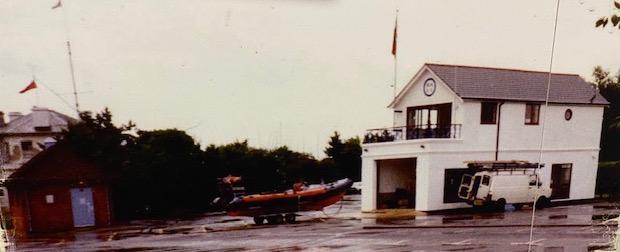
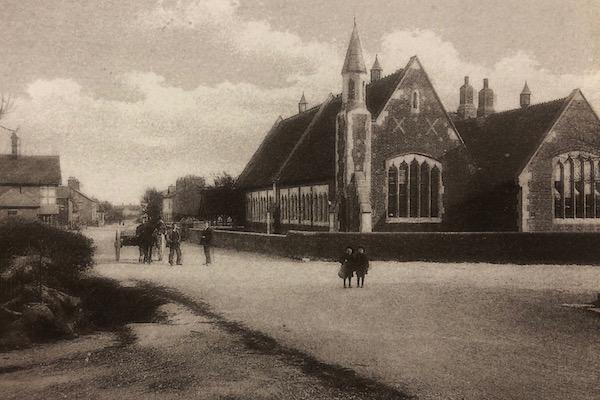
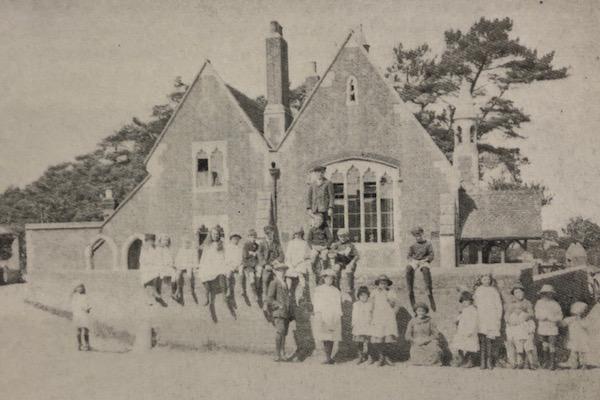 At this time the children looked forward to a weekly soup kitchen, in a house bearing the date 1897 a little way along Wainsford Road. Miss Helen Fullerton, of Pennington Chase, generously provided the ingredients, whilst volunteer helpers prepared the soup in a large boiler in the kitchen. The hot soup would contain rabbit, peas etc, and the children would bring their own bowl, spoon and bread. They would sit on benches inside the house to eat their soup, and women woud collect it in large wash-basins or jugs and be charged 2d a quart.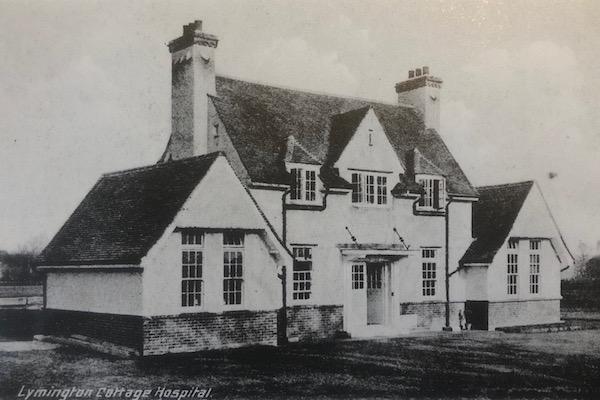
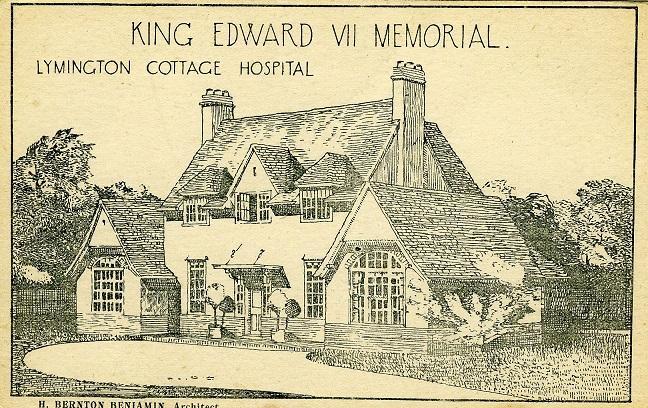 In 1929, local residents took part in a competition to purchase two plots of land on which a nurses home was constructed for £2,500. In the same year, a wealthy American visitor, Mr Barkley Henry and his wife, were treated at the hospital and presented a new theatre, X-ray and physiotherapy rooms in gratitude. An appeal to the local community raised a further £5,000 in 1932.
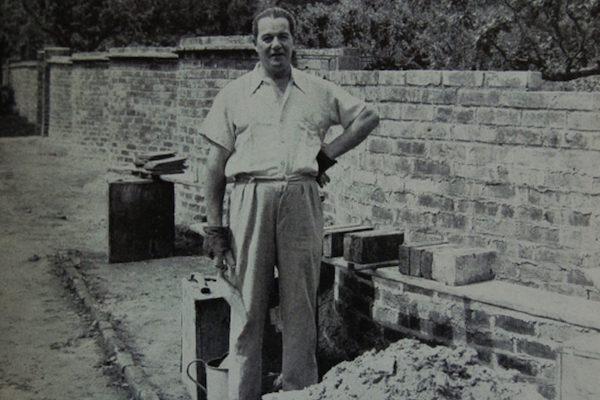
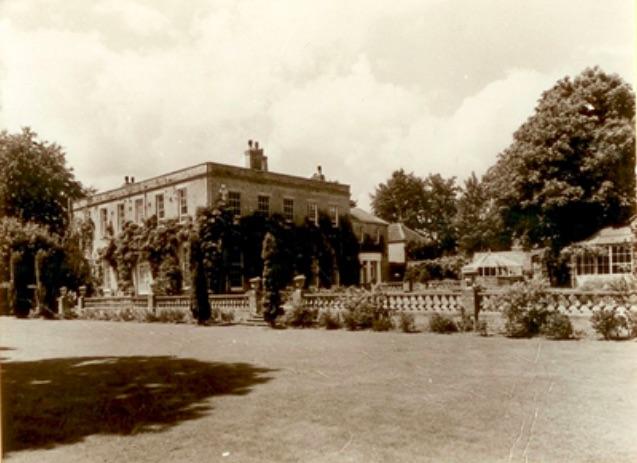 Dennis's crinkle-crankle remains to this day on the left hand side as you drive down Church Lane.
 Crinkle-crankle walls
 According to Dennis Wheatley in ‘Saturdays with Bricks’, “It was the French prisoners-of-war in Napoleon’s time who introduced serpentine walls into England. Following their capture, they were shipped to Portsmouth, then confined in the Isle of Wight. After a time, some humanitarian suggested that they should be allowed out on ticket-of-leave to work in gardens. That is why there are many more serpentine walls in the Isle of Wight and South Hampshire than in any other part of the country. They are said to have originated in Brittany, and it is highly probable that the Frenchman who first thought of making a wall wavy was not inspired by any artistic motive, but by economy.” (p95)
 No doubt an inspiration for Dennis Wheatley's crinkle-crankle wall is the example opposite in Church Lane. The wall at Elm Grove House is the oldest crinkle crankle wall in Lymington, thought to have been constructed in the early 19th century, possibly by Hanoverian soldiers when they were in exile in Lymington from the Napoleonic Wars (1803–1815) living in the adjacent house.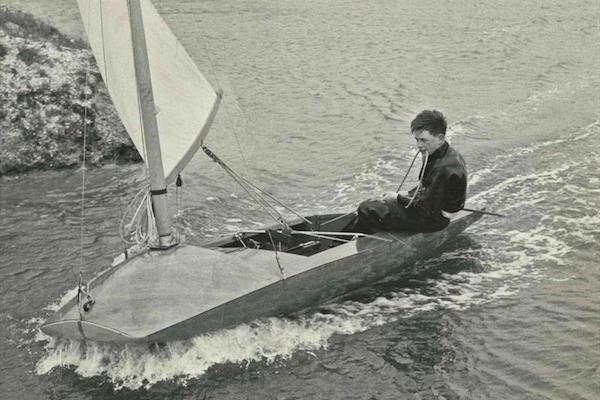
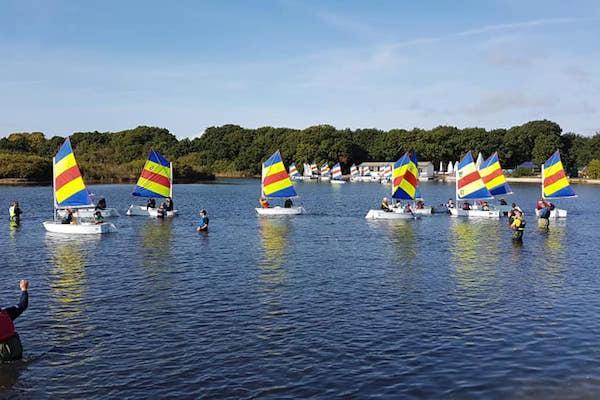 Over the years thousands of young people have learnt to sail at Salterns, developing a respect and love for the sea which has stayed with them all their lives. Many applied their experience in running the club to good effect, in running of other clubs and in their chosen careers.
 Over the past 20 years the club has raised over £150,000 for the BBC Children in Need appeal - this year's 24 Hour Sailathon will be taking place this Friday 15th and Saturday 16th November, all are welcome to come along on Saturday for a Big Salterns Brunch and to watch the sailing. It's a great opportunity to find out more about the club too! The Lymington Lifeboat crew will be coming along at 11.30am for their annual optimist race, where grown men attempt to sail children's dinghies around the Salterns Islands!

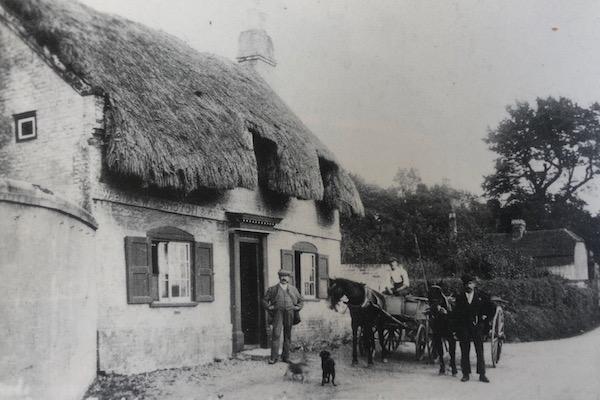 Meanwhile, across the river from Lymington a tragedy lies behind the haunting of The Ferryman pub at Walhampton, previously known as the Waggon and Horses* and before that the Waggon Ale House*.


 Paranormal activity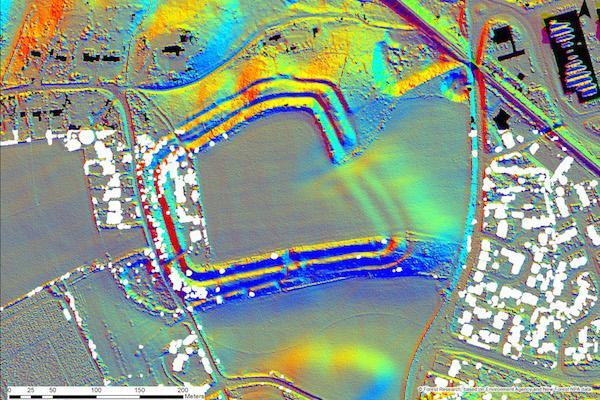
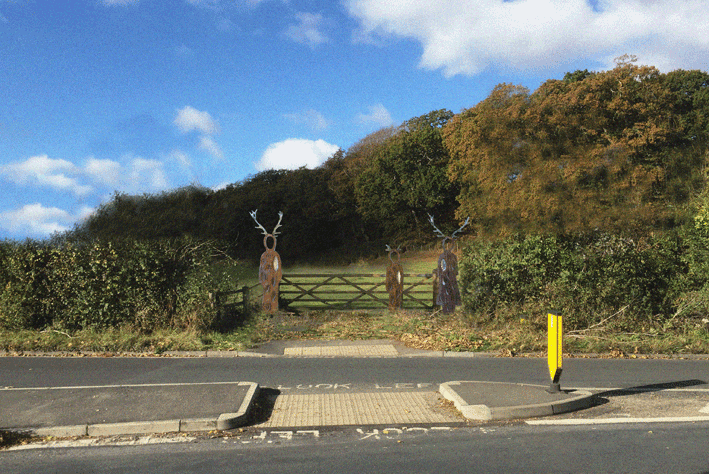 As you drive into Lymington along Southampton Road, it is easy to miss the grassy hill on your right. Many do not realise that this was once an Iron Age fortress and settlement, the 'original' Lymington.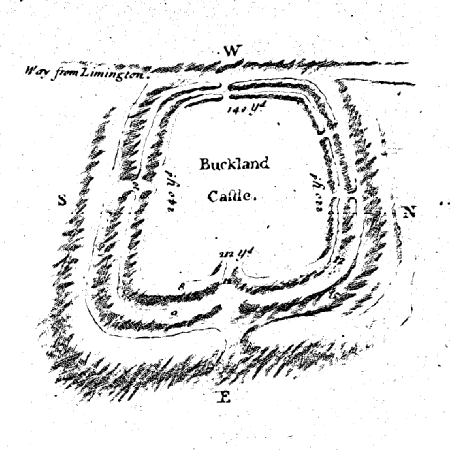
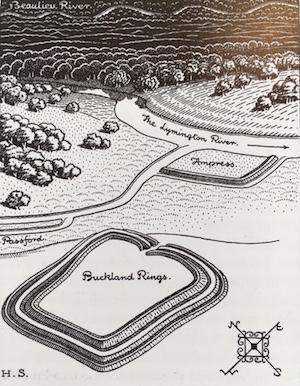 Early historians thought the site dated from Roman times, on account of its rectangular shape - it was logged as 'Roman fort' on ordnance survey maps dating from the 1880s. In 1885 the newly formed Hampshire Field Club and Archaeological Society examined the site and resolved that the word "Roman" should be omitted from future Ordnance Survey maps.
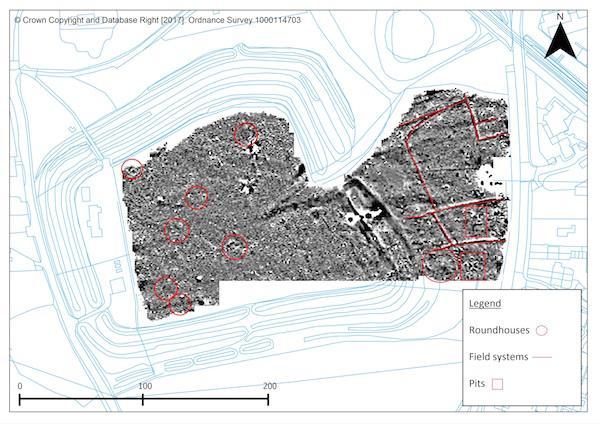 In 1935 excavations were carried out at Buckland Rings over a three week period under the supervision of Christopher Hawkes, following some preparatory work in 1934. The excavations were limited to the inner and middle ramparts and ditches on the east side where the ramparts had been almost totally removed around 1750. The excavation confirmed evidence of the east entrance, postholes for upright beams were found at the front of the inner rampart, with other postholes behind which could have held timbers for the front wall.
 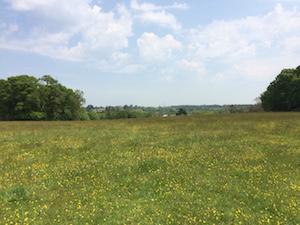 The port at Ampress was built at the tidal limit of the river at the junction with Passford Brook, in the shadow of the large port at nearby Hengistbury Head, a major trading and industrial centre.
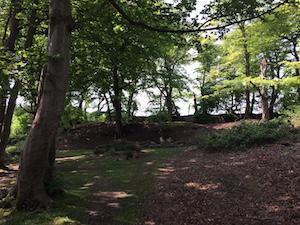 The taste of its occupants is demonstrated by the large quantities of oyster shells found in the banks. The density of the population in Iron Age Britain is not known, however it is thought that the Durotriges tribe settled in large numbers.