
Many people considering divorce want things to remain amicable. They may want to protect their children, avoid the stress and expense of going to court or simply end their relationship in a way that reflects the importance of the time they shared together.
Amicable does not necessarily mean easy though, and in this month's article Scott Bailey Solicitors explain why and how getting legal advice early can help both parties understand their position, manage expectations, and identify where reasonable compromises can be made.

Amicable Divorce - What Does It Really Mean?
Many people considering divorce want things to remain amicable. They may want to protect their children, avoid the stress and expense of going to court or simply end their relationship in a way that reflects the importance of the time they shared together.
However, there are some common misconceptions about what an amicable divorce actually looks like.
Amicable does not necessarily mean easy
An amicable divorce is one where both parties work constructively towards reaching a fair settlement, whilst seeking to avoid unnecessary conflict.
That does not mean the circumstances have to be straightforward. Couples may have complex finances, property, pensions or arrangements for their children to consider and still approach their separation amicably.
It is the way those issues are approached, rather than their complexity, that matters. Both people need to be prepared to communicate constructively, compromise where appropriate and work towards a fair outcome.
Nor does being amicable mean agreeing on everything from the outset. Divorce can involve difficult conversations and strong emotions, including anger, sadness and uncertainty about the future. The aim is not to avoid those issues, but to deal with them constructively.
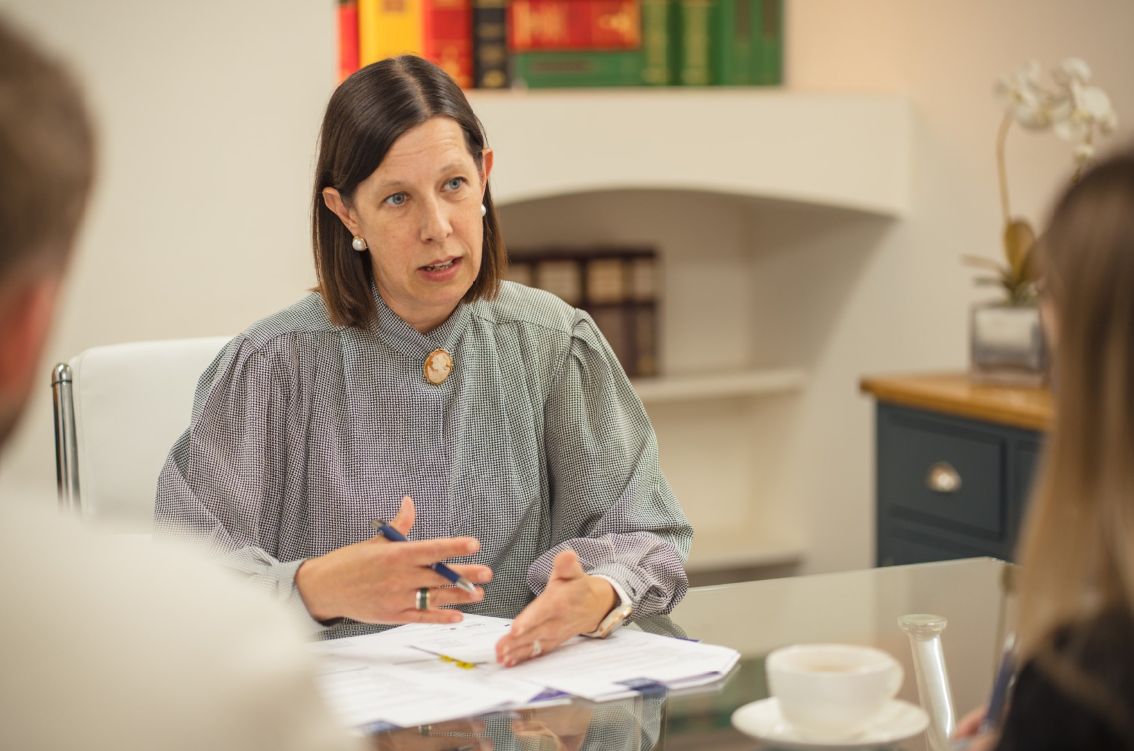
Can you use a solicitor and still divorce amicably?
Absolutely. Some people worry that involving solicitors will automatically make a divorce more confrontational. In reality, getting legal advice early can help both parties understand their position, manage expectations and identify where reasonable compromises can be made.
It is also important to remember that simply agreeing something between yourselves does not necessarily make it fair.
One person may have a better understanding of the family finances, for example, or important assets such as pensions may be overlooked. Legal advice can help ensure both parties understand the implications of the decisions they are making before reaching an agreement.
Do you have to go to court?
Separating couples are increasingly encouraged to consider ways of resolving matters outside court where appropriate.
Family mediation allows you to work with a neutral mediator who helps you discuss issues constructively and work towards your own agreement.
Other options include collaborative law, where each person has their own collaboratively trained solicitor and everyone works together to reach an agreement without going to court.
Resolution Together offers another approach, allowing one family law solicitor to work with both parties and advise them jointly on the legal framework whilst helping them progress matters constructively.
The right option will depend on your circumstances and how you would prefer to work together.
What if you have children?
An amicable approach can be particularly valuable where children are involved. Separation itself is not necessarily harmful to children, but prolonged conflict between parents can be.
Parents will usually need to maintain some form of relationship after separation, even though their relationship as a couple has ended. Taking a constructive approach can help establish the foundations for that future co-parenting relationship.
Mediation can also provide a space to discuss arrangements for children in a positive and forward-looking way. As children grow and circumstances change, separated parents can return to mediation to revisit those arrangements without necessarily having to go to court.
So, what does an amicable divorce really look like?
Ultimately, an amicable divorce is not about pretending everything is easy or rushing to reach an agreement. It is about approaching difficult decisions constructively, understanding what a fair outcome looks like and trying to minimise unnecessary conflict along the way.
Getting the right advice early can help you understand the options available and choose an approach that works for your circumstances.
Get legal advice if you’re hoping for an amicable divorce
The Family team at Scott Bailey LLP advises on divorce, separation, financial arrangements, children matters, cohabitation agreements, pre-nuptial agreements a more. With offices in Lymington and Lyndhurst, they can advise clients across the New Forest and beyond.

For more information on Scott Bailey, including the full breadth of services:
Contact Scott Bailey for a confidential initial meeting
Call- 01590 676933
Email-
Website- scottbailey.co.uk
Sign up for Scott Bailey's newsletter here
Find out more about Scott Bailey LLP, including opening hours and social media links.
About Scott Bailey LLP
Founded in 1930, Scott Bailey has grown to become a leading firm in the New Forest, providing a full range of legal services to private individuals and businesses. Services for individuals include Residential Conveyancing, Divorce, Family, Wills Trusts & Probate, Litigation & Disputes.
SME business legal services include Corporate, Commercial, Intellectual Property, Dispute Resolution, Landlord & Tenant, Insolvency and Employment Law. Scott Bailey LLP is one of only a very few firms based in the New Forest providing these specialist services.
The first firm in the region to receive the Law Society's prestigious LEXCEL award for high standards of practice management and customer care, Scott Bailey LLP promises top-quality, professional help from a team of expert solicitors who will put your best interests at the heart of their work.
Scott Bailey was delighted and proud to win "Business of the Year" at the 2023 New Forest Brilliance in Business Awards.
